| Press Reviews
Exhibition of Paintings
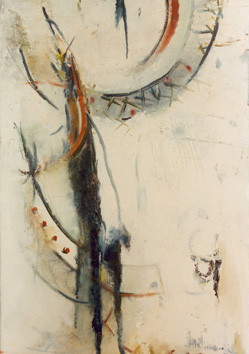
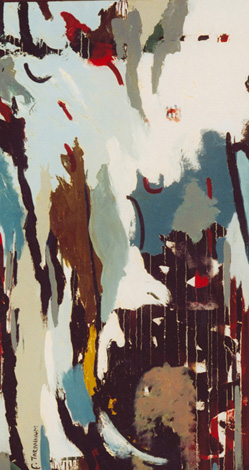
F Tarannum, a young artist, exhibits her solo show of paintings. Abstract and rich with colour, Tarannum translates the vocabulary of the palette itself on to the canvas. "First City" October, 2000
Read Article....
Diversity
Coming to our own artist, it certainly is the happening time. At this time of the year almost all art galleries are booked. “Delhi MID DAY” Thursday, November 9, 2000
Read Article....
Tarannum at Triveni Gallery
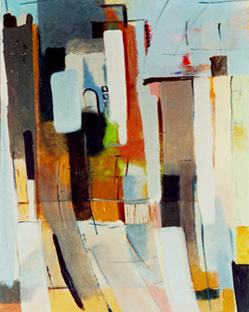
A bird eye view could make a city look like a work of art, And this is what Tarannum had done in her recent cityscapes exhibited at the Triveni Gallery. "ART&DEAL" January-February, 2001
Read Article....
Daring young artist break shackles
F Tarannum from Delhi are among the younger generation of modern Indian artist who dared to break the shackles of convention and chart their own artistic path. “THE HINDUSTAN TIMES” Saturday, November 18, 2000
Read Article....
City abstractions at the Triveni gallery
Tarannum is a young artist who is exhibiting her abstract cityscapes in the Triveni Gallery, Tansen Marg, New Delhi. "National Herald" Saturday, November 4, 2000
Read Article....
Aruna Bhowmick on an artist with a difference
F Tarannum shows her abstract paintings at the India International Centre. Veering between abstraction-figuration and back to abstraction, she has had a long struggle to come to terms with herself by way of crystallising her mode. “The Statesman” Friday, 26 December, 2003
Read Article....
INSIDE OUTSIDE
'I think to colours as they come out of the tube and are spread on the canvas,' says F Tarannum. 'Colours are dynamic and can be felt.
"The Indian Design Magazine" October, 2000
Read Article....
Riot of Colours
The most striking aspect of F Tarannum’s work is the dynamics played by colours and her inner self reflected through them. "AROUNDTOWN" October, 2000
Read Article....
A Rendezvous with Light by Tarannum
Delhi based artist F Tarannum, who finds a strange kind of symbolism in colors, in the hidden dynamics of color-play and space. "FIRST CITY" December 2000
Read Article....
Capital Art/Keshav Malik
Pre-viewing Tarannum's works at Triveni Kala Sangam in her impending first solo has been a happy moment. Her compositions are what are called abstract and for which very reason she may never ever be too popular. "ARTDEAL" September-October, 2000
Read Article....
Delhi Art World
There are a few artists who have succeeded in relating their art to colours, and F. Tarannum is decidedly one of them. F. Tarannum was born on 1 June 1968, and she is a graduate of the Aligarh Muslim University. "Woman'sera" October(second) 2000
Read Article....
F. Tarannum
Art is a product of human experience which materials are skillfylly ordered to communicate a defined from. Recently, a well know artist F. Tarannum exhibited her paintings at the art gallery of IIC Annexe title. "Woman's era" January(First) 2004
Read Article....
The magic of colours
The world around us alive with colour. Undoubtedly the most expressive of all visual elements, it is also the most intractable. F Tarannum is a Literature graduate from Aligarh Muslim University. "THE STATESMAN" DELHI, FRIDAY, 27 OCTOBER, 2000
Read Article....
Colour Versus Form
Art can achieve the orchestric and rhythmic connection between internal and external emotions. The spiritual correspondence comes out strongly in the woks of Gaynor Hassan at Art Heritage, a sculptor-painter from Kashmir and Delhi based painter Tarannum at Triveni. "The Pioneer", Wednesday November 1, 2000
Read Article....
|